3 h973 reviews
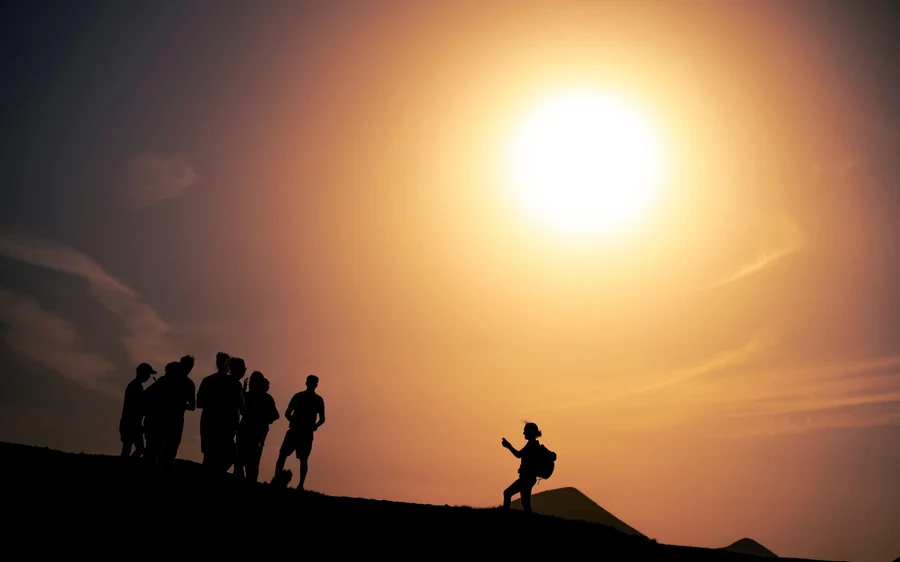
3 hLanzarote: Trekking In the Timanfaya eruption Natural Park.
★ 4.8 · 973 reviews
- Three hours, in Timanfaya Natural Park
- Guided hike
- White wine
- Free cancellation
$54$18.00 / hour
Check availability→ The 1730 eruption
Almost everything people photograph on this island was made in one stretch of the eighteenth century. The eruption Lanzarote volcano landscapes came from began in 1730 and did not stop for six years, and by the time it finished roughly a quarter of the island lay under new rock. That is the whole story in one line, and the rest of this page is what those six years actually left on the ground: the black fields in the south, the cones standing in rows, the tunnels underneath, the ash the vines now grow in. It is history, not a forecast — and it is also, very practically, the reason the tours here look the way they do, from $48 for a guided walk to $172 for a morning driving across it yourself.

Quick answer
The short answer. The eruption Lanzarote volcano tours are built around ran from 1730 to 1736, six years, and covered about a quarter of the island in new rock. Nothing has erupted here since, and the ground you visit is cold. To stand on that rock with a guide, book $54 or $48. To see the heart of it, the park itself is shown by coach — $68 for half a day, $68 for six hours. To drive across the volcanic tracks under your own steering, $172 is the one listing on this site that lets you.
What actually happened
Most volcanic scenery in the world is made in days or weeks. Here it took six years, and that single difference is why the south of Lanzarote looks the way it does. A short event leaves a scar. Something that keeps going from 1730 to 1736 builds a landscape: flow on top of flow, cone after cone, until the new ground has its own shape, its own drainage and its own colour. The eruption Lanzarote volcano fields were laid down by was long enough to do exactly that.
A quarter of the island. That is the figure to hold on to. Roughly one part in four of Lanzarote is covered by rock that did not exist before 1730. You do not need a map to see where the boundary runs: the colour changes under the bus window, from farmed brown to something close to charcoal, and it stays that way for kilometre after kilometre. The Lanzarote volcano eruption 1730 is the line every geology book about the Canary Islands draws, and on the ground it is drawn just as plainly.
The cones came in a row, not a heap. One of the first things people notice from the coach is that the hills are not scattered. They line up. The eruption Lanzarote volcano maps still show opened along cracks in the ground rather than from a single mountain, and each stretch of crack built its own cone, which is why the ridge reads like a procession rather than a peak.
And then it stopped. The ground has been cold and quiet ever since, long before anyone alive today was born. Visiting is an exercise in looking at old rock, the way you would look at a glacier valley or a canyon — slowly, and with somebody who can tell you what you are seeing.
Every trip, current fare
The six listings on this site that put you on or above the rock from those six years. All of them are sold on the same thing: the eruption Lanzarote volcano fields left behind between 1730 and 1736. The cost-per-hour column is the honest way to compare a three-hour guided walk with a nine-hour island day, because those are not the same purchase and the fare alone will not tell you which is which.
| Tour | Length | Price | What is included | Cost per hour | Rating |
|---|---|---|---|---|---|
| Lanzarote: Trekking In the Timanfaya eruption Natural Park.Lanzarote: Trekking In the Timanfaya eruption Natural Park. | 3 h | $54 | A guided trek through the natural park of the 1730 eruption | $18.00 | 4.8 · 973 |
| Lanzarote: Guided Volcano Hike with TransfersLanzarote: Guided Volcano Hike with Transfers | 3h 30m | $48 | A guided volcano walk with hotel transfers both ways | $13.71 | 4.9 · 945 |
| Lanzarote: Hike Across Timanfaya's Volcanic LandscapesLanzarote: Hike Across Timanfaya's Volcanic Landscapes | 3 h | $50 | A guided walk across volcanic ground outside the park | $16.67 | 4.8 · 1,518 |
| Lanzarote: Timanfaya National Park - Half day tourLanzarote: Timanfaya National Park - Half day tour | 5 h | $68 | Half a day around the park, with the coach route inside it | $13.60 | 4.4 · 2,785 |
| Lanzarote: Timanfaya National Park TourLanzarote: Timanfaya National Park Tour | 6 h | $68 | A six-hour run to the park and the south of the island | $11.33 | 4.4 · 1,019 |
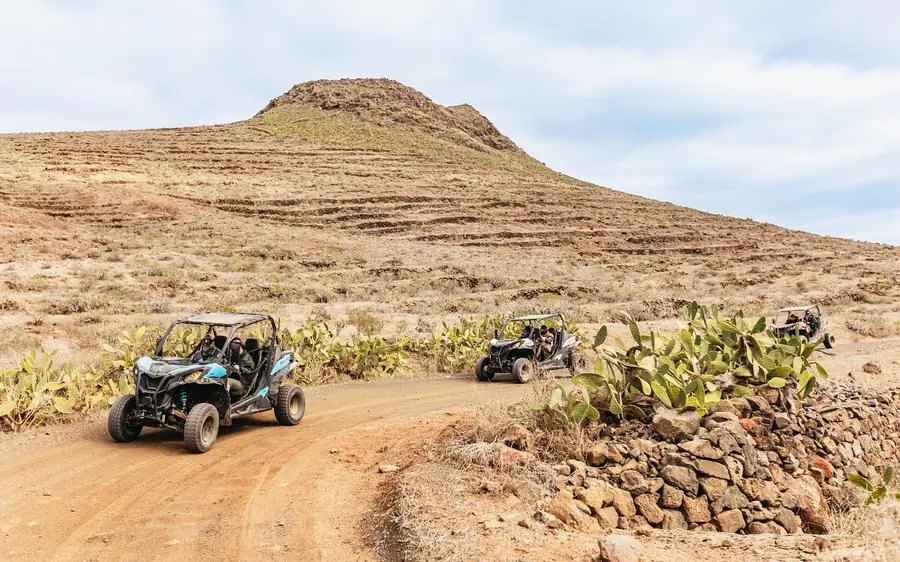
| Lanzarote: Guided Off-Road Volcano Buggy TourLanzarote: Guided Off-Road Volcano Buggy Tour | 2 - 3 hours | $172 | A guided off-road buggy you drive yourself, over volcanic tracks | $68.80 | 4.7 · 5,513 |
What it left behind
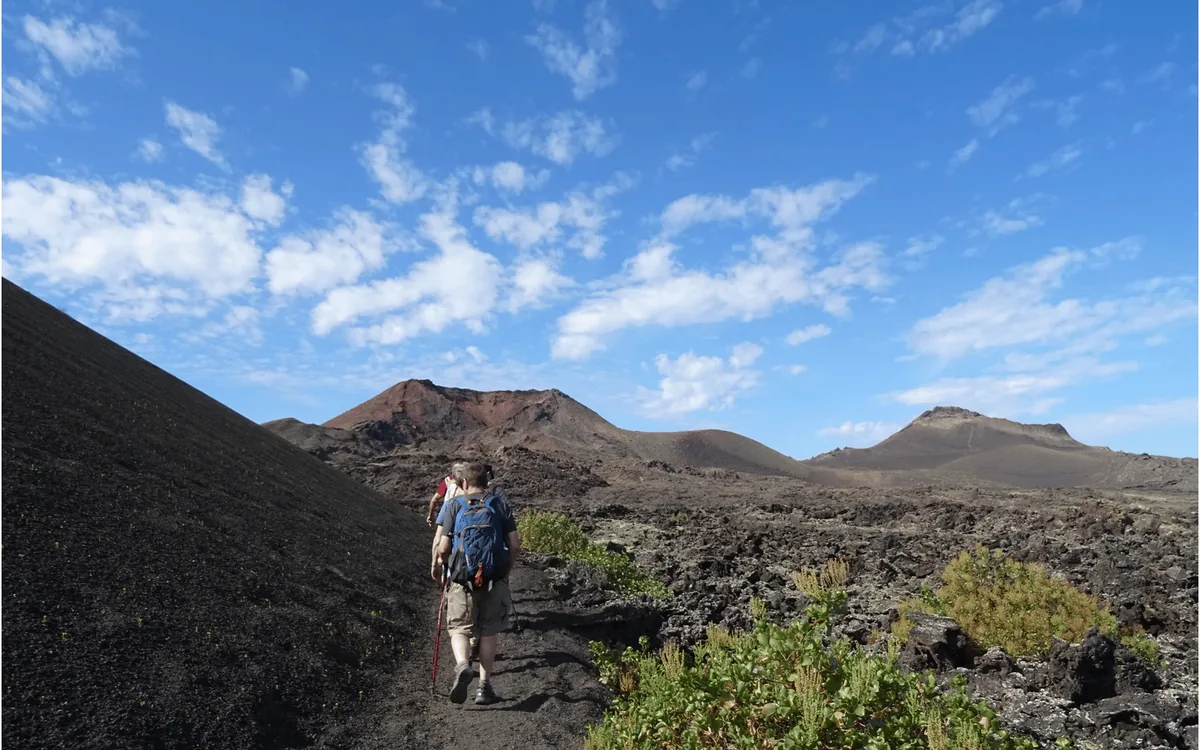
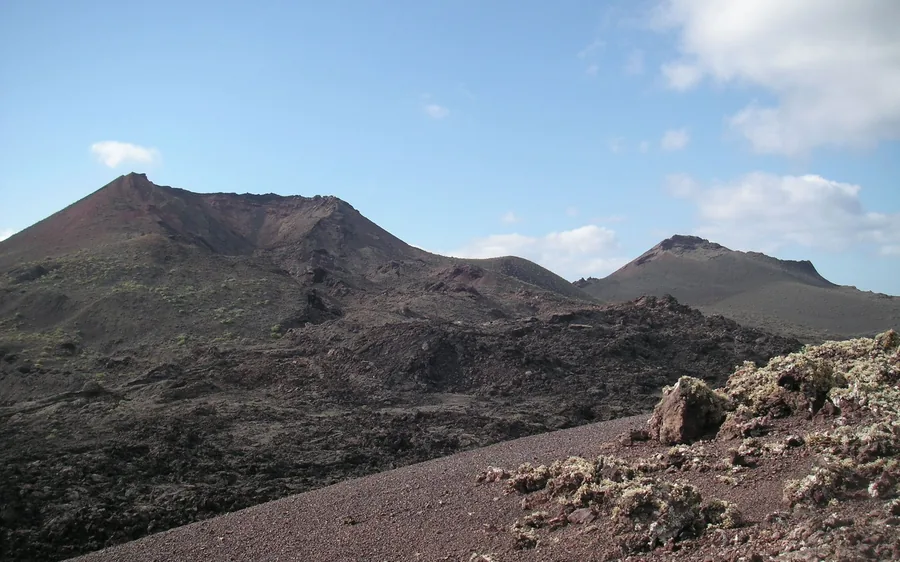
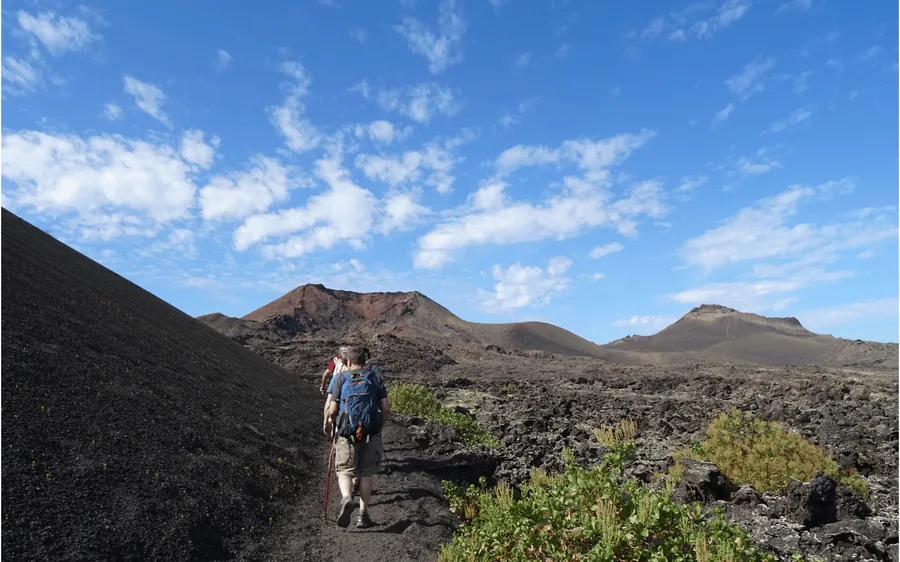
The black fields. The obvious one. Mile after mile of rough, dark rock with very little growing on it, laid out across the south. The ground is not smooth: the eruption Lanzarote volcano walks cross is broken, loose in places and sharp in others, which is why the walking listings are guided and why nobody sells a stroll across it in sandals.
The tunnels. This is what a lava flow does anywhere it runs far enough: the outside chills and hardens while the inside stays liquid and drains away, leaving a hollow tube under the surface. The island has famous examples of it in the north, at Jameos del Agua and Cueva de los Verdes, far from the fields in the south, and they are the reason a volcanic island can sell you a cave visit at all. There is a separate page on this site for both.
The half-crater on the coast. At El Golfo the sea took one side of a cone and left the other standing, with a green lagoon in the bowl. It is the neatest cross-section of a volcano anybody is ever likely to walk up to, and it is a five-minute stop on several of the tours here.
The ash the vines live in. North-east of the fields, the ground is covered in fine dark grit rather than solid rock, and the wine country of La Geria grows directly in it. That is not decoration or tradition for its own sake: the ash holds the night moisture that this island otherwise does not get.
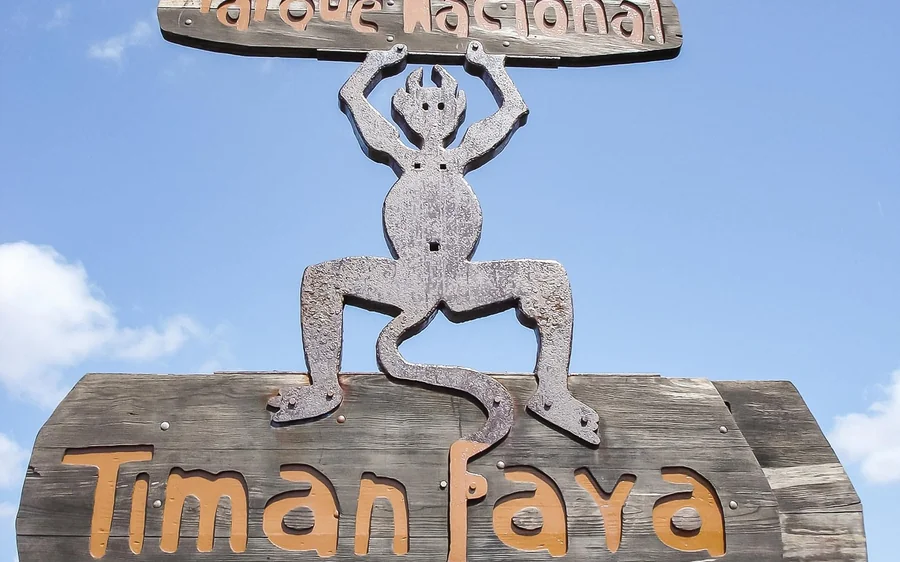
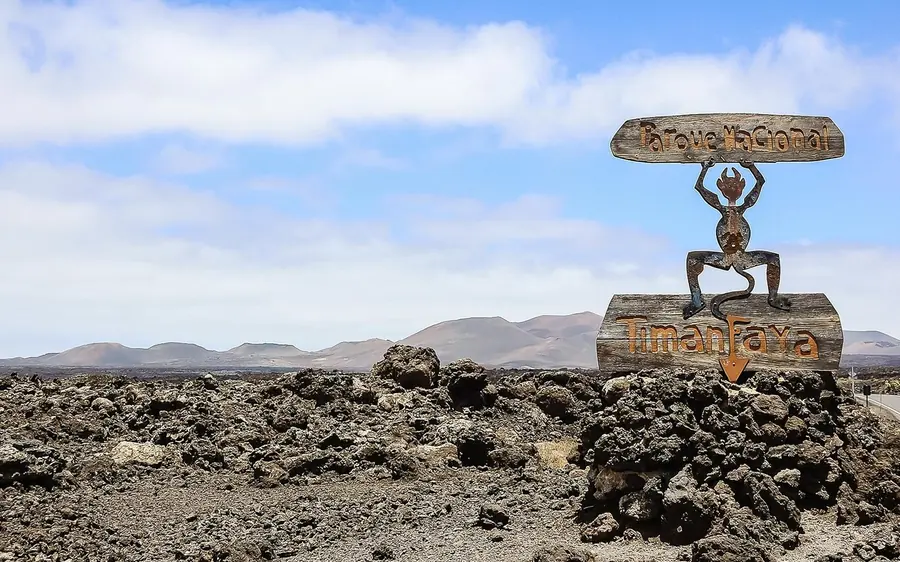
The names. Half the place names a visitor hears in the south belong to the eruption Lanzarote volcano country was renamed by: fire mountains, the fire village, the road of the fires. They are eighteenth-century descriptions that simply stayed on the map, and once you know that, the signage reads like a record rather than marketing.
The heat show at El Diablo. Inside the park, by the visitor building, guides demonstrate the warmth still held in the ground: dry grass dropped into a pit catches from the heat coming out of it. It is the one place where the volcano Lanzarote visitors came to see stops being scenery and becomes something you can feel from a metre away.
Reading the listing
These five lines separate a coach day from a walking morning and a half day from a full one on the eruption Lanzarote volcano ground. full one. All five are easier to settle at booking than at a meeting point, and the right-hand column is what usually happens when they are skipped.
| What to check | Where it lives | Why it matters | If you skip it |
|---|---|---|---|
| Whether you are walkingor riding the park route | The title and the description | The park is shown by coach; the walks on this site run outside its boundary | Boots packed for a day spent entirely in a seat, or the reverse |
| Whether transfers are namedhotel pickup or meeting point | The inclusions | $48 names transfers; other listings expect you at a point | A taxi fare nobody planned, at an hour when few are about |
| How long it really runsthree hours or nine | The duration field | The island days run 8 - 9 hours and the walks 3 - 3.5; both say so plainly | Half a holiday gone, or a park visit that felt rushed |
| What else is on the routecaves, lagoon, wine country | The itinerary on the listing | Only some listings name the caves or El Golfo; the rest concentrate on the park | Expecting a stop that was never part of the fare |
| Whether entry is includedpark and cave tickets | The inclusions | Each listing states what it covers; do not assume across listings | A ticket desk at the gate and a queue you had not budgeted for |
Book direct
The listings above with their current fare, rating and review count, all of them on or above the eruption Lanzarote volcano fields. Every tour on this site has free cancellation, which matters when you are booking a walk weeks before you know what the week will look like.
★ 4.8 · 973 reviews
★ 4.9 · 945 reviews
★ 4.8 · 1,518 reviews
★ 4.4 · 2,785 reviews
★ 4.7 · 5,513 reviews
★ 4.5 · 2,845 reviews
What to expect
All of it is what the eruption Lanzarote volcano landscape actually does, or what the listings on this site describe. Nothing here is a prediction.
Photographs flatten it. In person the fields read almost as charcoal, and the contrast with a whitewashed village on the edge of them is the image most people come home with.
Very little grows on the young rock, so there is little for wind to move and almost no birdsong over the fields. People comment on the silence more than on the colour.
This is the question behind half the searches that reach this page. The ground has been cold since well before living memory, the park runs on a normal timetable, and a visit is a visit to old rock.
There was no Lanzarote volcano eruption 2021 and no Lanzarote volcano eruption 2022 on this island; those searches belong to other places in the Atlantic. The same goes for a Lanzarote volcano eruption 2017 — the island was as quiet then as it is now.
And boring is the correct answer. The island is a tourist destination with a national park, a coach timetable and a restaurant at the visitor centre.
The demonstration at El Diablo is the only place any listing on this site describes warmth you can sense, and it is a staged demonstration at the visitor area, not something you meet out on the fields.
It applies to every tour on this site, which is worth having when the walking listings are small-group and fill up in the high season.
When to go
The rock does not change. What changes is how comfortable it is to stand on the eruption Lanzarote volcano fields, and how many other people are doing the same thing at the same hour.
Winter
The most comfortable months to walk on dark rock, and the light in the afternoon picks out the cones. $54 and $48 are at their easiest here.
Spring
The farmed ground next to the flows has colour in it, which makes the boundary between the two even sharper from the coach window.
Summer
Black surfaces do what black surfaces do. The coach days such as $68 handle it best; walking listings are worth taking early.
Autumn
The crowds thin before the winter arrivals begin, and the light is still long. A good window for $172 if driving yourself is the plan.
The verdict
To walk on it, book $54. Three hours on foot across the eruption Lanzarote volcano ground with a guide, in the natural park of the 1730 eruption, rated 4.8 across 973 reviews, and the cheapest fare on this site.
For the best-rated walk with pickup, book $48. Three and a half hours, transfers both ways named in the listing, rated 4.9 across 945 reviews — the highest score on the site.
For the park itself in half a day, book $68. Five hours including the coach route inside the boundary, rated 4.4 across 2,785 reviews.
To drive across the volcanic tracks yourself, book $172. Two to three guided off-road hours, rated 4.7 across 5,513 reviews, the largest pile of feedback on this site by some distance.
And for the eruption plus what it left underground, book $102. Nine hours taking in the park, Jameos del Agua and Cueva de los Verdes, rated 4.5 across 2,845 reviews.
The tunnels under the fields are the other half of this story: two visits, one lava tube, and two completely different ways of showing it.
See the lava caves→Common questions
Six years, from 1730 to 1736. That length is unusual, and it is the reason the new rock covers roughly a quarter of Lanzarote rather than a single valley.
Long enough ago that no one alive remembers it. The six-year event of 1730 to 1736 is the one that shaped the landscape you visit, and the island has been quiet since. The park operates on a normal daily timetable.
Outside the national park, yes, with a guide: $54, $48 and $50 all do exactly that. Inside the park itself you see the ground from the coach on its circular route, and no listing on this site offers a free-ranging walk in there.
At one spot. Guides at El Diablo, by the visitor building inside the park, show the warmth held below the surface by dropping dry grass into a pit, where it catches. Everywhere else the rock you touch is simply rock.
About a quarter. It is concentrated in the south and centre, which is why the north of Lanzarote looks like a different island: farmland, villages and cliffs rather than black fields.
The guided walks, because someone is standing next to you on the eruption Lanzarote volcano rock answering questions: $54 and $48. The coach days cover more ground and more sights, but the commentary is shared with a full vehicle.
Go deeper
Twenty-two ways to see the lava, by what they reach and what they cost.
TimanfayaThe coach route inside the park, and why you cannot simply walk in.
Buggy toursDriving the lava tracks yourself, and what the day is like.
Volcano hikesWalking on the lava outside the park, with a guide.
The park busWhat the 14-kilometre coach loop shows you, and what it does not.
Lava cavesThe tunnels the lava left, and the tours that include them.
Lanzarote: Guided Off-Road Volcano Buggy Tour
★ 4.7 · 5,513 reviews · Free cancellation 24 h