Our top pick5,513 reviews
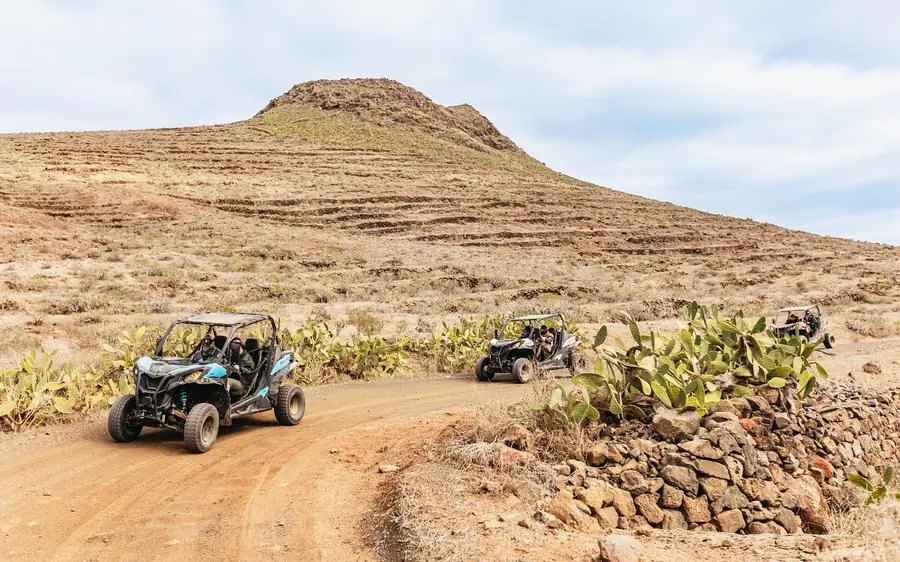
2 - 3 hoursLanzarote: Guided Off-Road Volcano Buggy Tour
★ 4.7 · 5,513 reviews
- 2 to 3 hours, from Costa Teguise
- Peñas del Chache
- Most booked
- Free cancellation
$172$86.00 / hour
Check availability→ What to wear
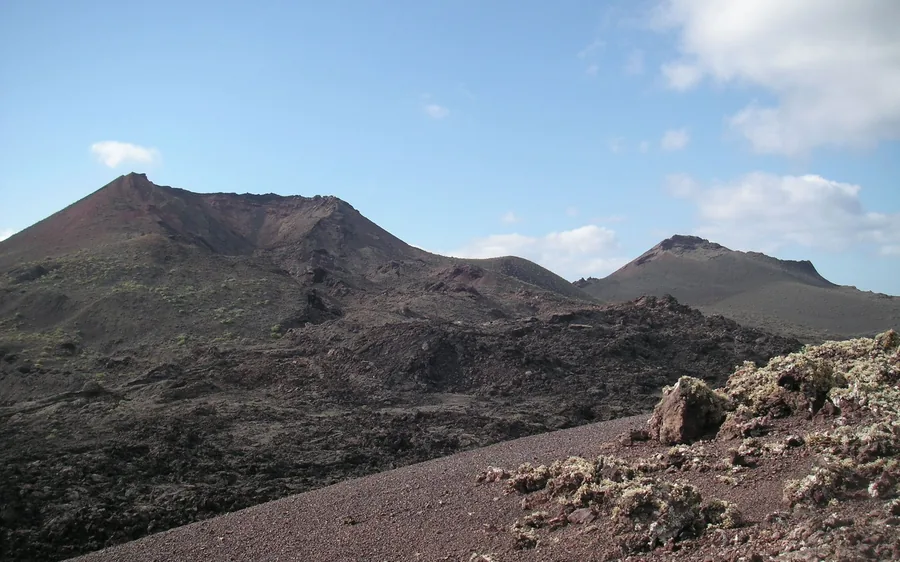
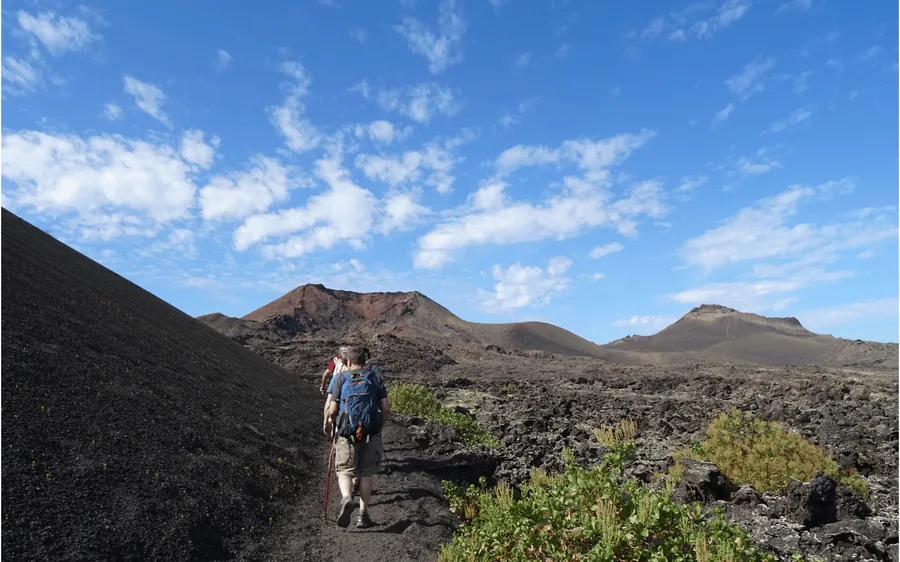
Almost everything on this page comes back to one fact: the ground here is broken volcanic rock, it is dark, and there is nothing growing on it to put shade over you. That makes the packing list short and unusually firm. Closed shoes with a thick sole, because the rock is sharp underfoot and it holds the sun’s heat. Sun cover you carry with you, because there is none out there to borrow. Something that stops wind, because the trade winds work this island in every month and an exposed flow is breezier than the beach. And one warm layer in the bag if your day runs into the evening, because the same open ground that bakes at noon loses its heat fast once the sun drops. Below: what to wear for the coach loop, for a three-hour walk on the lava, for a buggy morning and for a boat, and why the shoes matter most.
Quick answer
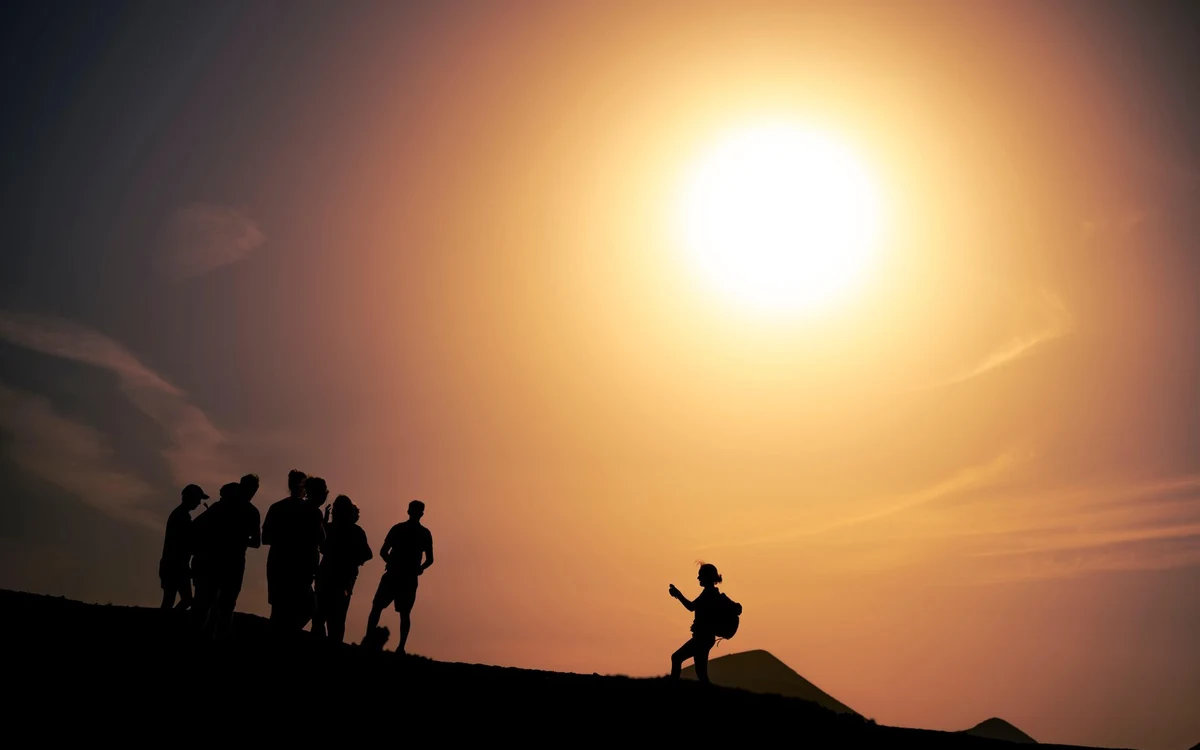
The short answer. Closed shoes with a thick, stiff sole; a hat you will not lose in the wind; sunglasses; sunscreen on before you leave; a thin windproof layer; and a bottle of water. That covers every listing on this site, from the coach loop at $68 to three and a half hours on foot at $48. If your day finishes late, put a warm layer in the bag as well. What you do not need is walking poles, boots rated for mountains, or anything waterproof beyond a windproof shell — the volcanic south is dry and the walking is over uneven ground rather than up anything steep.
The shoes
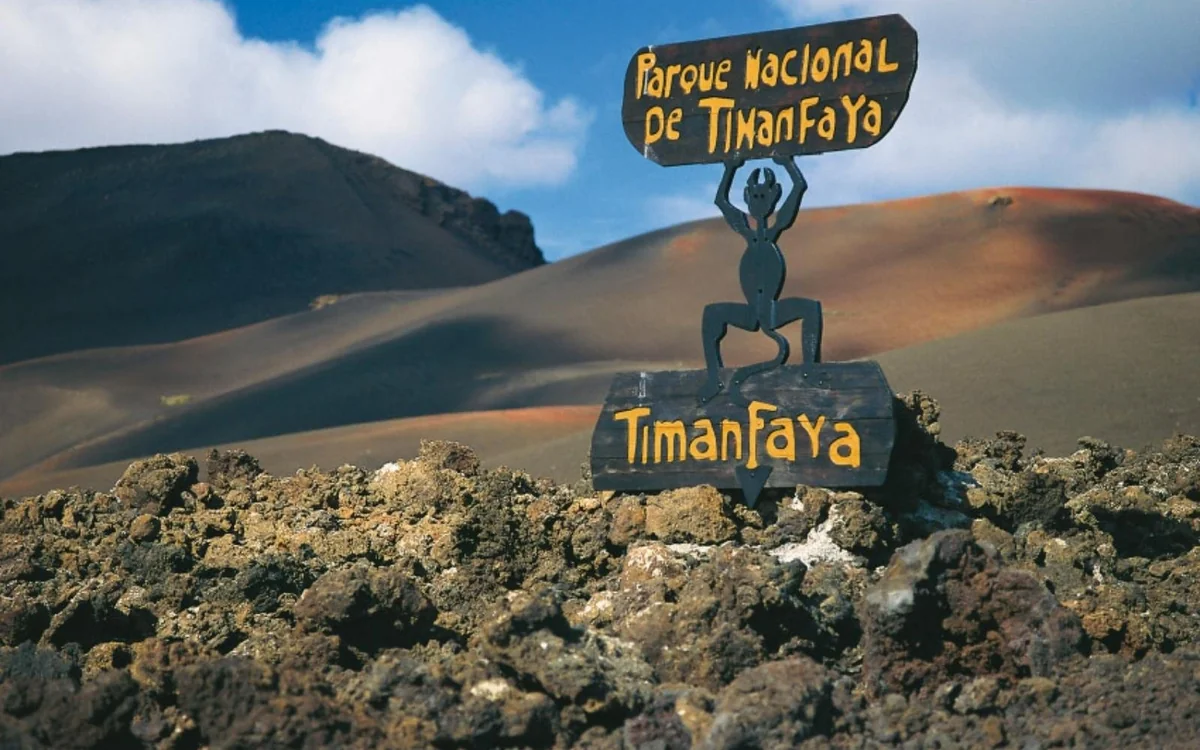
Volcanic rock is not like other rock. When lava cools it sets into surfaces that are either loose grit and clinker or a jagged crust full of edges, and both of them are underfoot at every stop out here. Two things follow from that, and they are the reason we are spending a whole section on footwear.
It is sharp. A thin sole transmits every edge, and a flexible sole lets the rock press through where it finds a gap. What you want is a stiff sole with some depth to it — a trainer with a proper tread is enough for the roadside stops and the viewpoints, and a walking shoe or light boot is better for the three-hour listings. Open sandals are the one genuinely bad choice: loose volcanic grit gets in immediately, and it is grit with edges.
It holds the sun. Dark stone absorbs heat all morning and gives it back through whatever is touching it. In summer that is felt through a thin sole on a long stop, and it is one more reason the guided walks here run early rather than at midday. A thicker sole is simply more comfortable in July, and it costs you nothing in January.
Ankles. The walking listings — $48, $50 and $54 — are three hours or so over uneven ground, not a climb. You do not need mountaineering boots. But ground that shifts slightly under each step is exactly where an ankle gets turned, so if you own something with a bit of support, this is the trip to bring it on. Socks that cover the ankle also keep the grit out.
And afterwards. Fine black dust gets into everything and it is not kind to pale fabric. Bring the shoes you do not mind dusting off, not the white ones you bought for the holiday.
The list itself
Nothing on this list is specialist and nothing needs buying at home. It is a list about sun, wind and sharp ground.
The one item worth being firm about. Sharp, loose, heat-holding ground at every stop, and three hours of it on the walking listings. Trainers with real tread as a minimum, a light walking shoe if you have one.
A brim is worth more than a cap out here because there is nothing to stand under. It also needs to stay on: a hat that blows off onto a lava field is a hat you are not going to enjoy retrieving.
Strong light off pale grit and dark rock together, and dust moving in the wind. On the buggy they are closer to equipment than to an accessory.
There is no shade on the flows in any month and the stops are short. Putting it on at the hotel means you are looking at the crater rather than rummaging in a bag.
The trade winds are the constant here. A shell that actually stops wind changes an exposed viewpoint far more than a thick fleece does, and it rolls up to nothing in a day bag.
Open ground loses its heat quickly after sunset, and the listings that run into the evening — the sunset cruises at $60 and $61 — are out on the water when it happens.
Dry air and steady wind take moisture off you without the drama of visible sweat. A bottle each, refilled whenever you pass somewhere to refill it.
On the walks you want both hands for balance on uneven rock, and on the buggy you want nothing loose. A small rucksack solves both.
By listing
Four formats, four slightly different answers. The shoes are the same in all of them.
| The kind of day | Example | How long | What to wear |
|---|---|---|---|
| The park loop from a coachSeated for the drive, short stops | $68 | 5 h | Closed shoes for the stops, hat, glasses, sunscreen. A light layer for the air-conditioned coach, which can be cooler than the car park by a fair margin |
| A guided walk on the lavaThree hours on uneven ground | $48 | 3h 30m | Walking shoes or light boots with a stiff sole, socks over the ankle, hat, glasses, sunscreen, windproof shell, and water you are carrying yourself |
| The buggyOpen vehicle, dust, moving air | $172 | 2 - 3 h | Closed shoes, eye cover of some kind, a layer over your arms, hair tied back, and nothing loose in your hands or pockets. Clothes you do not mind dusting |
| On the waterSpray, sun and evening chill | $56 | 2h 30m | Shoes with grip on a wet deck, sunscreen reapplied because the reflection doubles it, and a warm layer if the listing runs to sunset |
Sun and wind
You will have spent the rest of the week on a beach or by a pool, where there is shade if you want it and the air sits still between the buildings. The volcanic south is neither of those things, and the adjustment catches people out.
The light is doubled. Sun comes down on you and comes back up off pale grit and off the light-coloured surfaces at the viewpoints. Skin that was fine at the hotel gets more than it expected out here, and the back of the neck and the tops of the ears are the places people forget. If you burn easily, a long thin sleeve does more for you than repeated applications.
The wind is constant. This is an island the trade winds work all year. On an exposed flow that means moving air across you at every stop, which is a genuine relief in August and a reason to have a shell in January. It also means anything light — a map, a hat, a plastic bag — is gone the moment you let go of it, and it is gone across protected ground you are not going to walk out onto to retrieve it.
On the coast it is stronger still. The days that include the west coast — the cliffs where the sea works into the rock, and the green lagoon at El Golfo on $70 and $56 — are the windiest stops of the lot, because there is nothing between you and the Atlantic. Wear the layer rather than carry it.
And the evening. Open volcanic ground gives its heat up quickly once the sun is off it. A day that felt hot at three can feel cool at seven, particularly out on the water. One warm layer at the bottom of the bag covers it; nothing heavier is needed.
The month you come in changes how much of this matters. Here is how the year behaves.
See the months compared→Book direct
The buggy we put first, the three guided walks where the shoes matter most, the half day in the park from a seat, and the nine-hour day that adds both lava caves.
★ 4.7 · 5,513 reviews
★ 4.9 · 945 reviews
★ 4.8 · 1,518 reviews
★ 4.8 · 973 reviews
★ 4.4 · 2,785 reviews
★ 4.5 · 2,845 reviews
Common questions
Not a good idea. Volcanic rock is sharp and the loose grit on top of it has edges, so it gets into an open shoe within a few steps. Closed shoes with a thick sole are the one item on this page worth being firm about, even if you are only doing the coach loop and its stops.
No. The guided walks here — $48, $50 and $54 — are about three hours over uneven ground rather than a climb. Trainers with real tread will do it; a light walking shoe with a stiffer sole is more comfortable.
Mild rather than cold, but windier feeling than the coast. A thin layer that stops wind does far more out there than a thick one that does not, and it packs away when the sun comes out.
Closed shoes, something over your eyes, a layer over your arms, hair tied back and nothing loose. $172 is an open vehicle on dusty tracks, so expect to be dusted and dress in things you do not mind dusting.
More than you think. Dry air and steady wind take it out of you quietly, and there is no shade to recover in. A bottle each is the sensible minimum on any listing that runs more than a couple of hours.
Free cancellation applies on every tour listed on this site, within the window the listing states. On an island this dry the variable is usually wind rather than rain, and it is worth having the option to swap a morning.
Go deeper
Twenty-two ways to see the lava, by what they reach and what they cost.
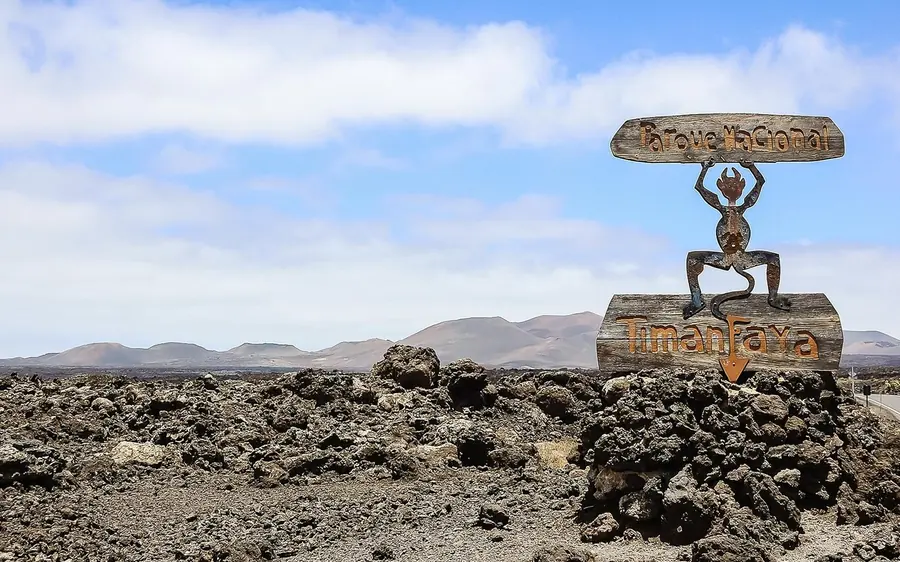
TimanfayaThe coach route inside the park, and why you cannot simply walk in.
Buggy toursDriving the lava tracks yourself, and what the day is like.
Volcano hikesWalking on the lava outside the park, with a guide.
The park busWhat the 14-kilometre coach loop shows you, and what it does not.
The 1730 eruptionSix years of lava, and the landscape it left behind.
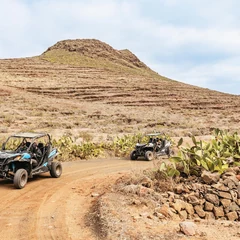
Lanzarote: Guided Off-Road Volcano Buggy Tour
★ 4.7 · 5,513 reviews · Free cancellation 24 h